Aviation: The Next Generation

Listen to this article
The aviation industry is at a critical juncture. As it faces ambitious sustainability goals, rapid technological advancement, and evolving societal expectations, the sector must also address a pressing need: attracting and retaining the next generation of talent. And the success of that will be critical to successfully addressing those other issues.
To understand how the industry can rise to this challenge, we spoke with four leaders from across the industry who are helping to shape the future of recruitment and skills development. Poorvi Patel is Head of Education, Employment and Skills at Heathrow; Simon Thompson, Group CEO at Windracers, UK-based manufacturer of long-distance heavy-lift drone, ULTRA; Ellie Long the Global Head of Emerging Talent for Rolls-Royce; and Mark Crompton, who leads Airbus’ employment marketing team.

Continue reading...
Purpose and passion: The new pillars of attraction
Younger generations today are driven less by prestige and more by impact. For Simon Thompson at Windracers, this alignment between mission and technology is a compelling hook and one his company fits perfectly into. “Our combination of purpose and technology is really addictive to them,” he says. “It’s in their sweet spot - solving big challenges with cutting-edge tech, in a way that really matters.” Windracers’ autonomous aircraft have already flown over 10,000km in live missions, delivering essential cargo across some of the most demanding environments.

Purpose and technology has proved an attractive blend for Windracers
Photo credit: Windracers
This sentiment is echoed by Poorvi Patel at Heathrow, who notes that “The younger generation values innovation, sustainability, and inclusivity.” The challenge, she says, is to communicate these values more effectively if aviation is to compete with other sectors for emerging talent. “We need to highlight how aviation supports medical emergencies, disaster relief, global connectivity, and economic growth - real-world impacts that resonate with young people.”
The younger generation values innovation, sustainability, and inclusivity. The aviation sector needs to improve its communications of these values.
Poorvi Patel
Heathrow Head of Education, Employment and Skills
At Airbus, Mark Crompton sees no shortage of opportunities for purpose-led, innovative work. “The challenge of decarbonising aerospace isn’t putting young people off - it’s attracting them,” he explains. “We’ve always been pioneers from an aerospace perspective, so how do you super cool hydrogen at 30,000 feet? How do we develop fuel cells or build SAF infrastructure at and airport? These are problems young engineers want to solve.”
The challenge of decarbonising aerospace isn’t putting young people off - it’s attracting them.
Mark Crompton
Airbus Head of Employment Marketing
Ellie Long at Rolls-Royce agrees but like Patel, she cautions that the sector must evolve its messaging. “Aviation is already exciting—we just need a better narrative. It’s no longer just about pilots and engineers in overalls; it’s about AI, sustainability, automation, data analytics, and advanced manufacturing. We need to showcase these evolving skillsets and connect them to the broader impact young people care about.”

Rolls Royce are emphasising modern skillsets required for aviation including those in AI an sustainability
Photo credit: Rolls Royce
Rethinking misconceptions about Gen Z
While older generations often look upon the next with a sense of mild bewilderment, with Gen Z there is the temptation to think their needs are so different we need to tear up the workplace rule book. And while much has been said about generational shifts in the workplace, these leaders argue that many of those assumptions about are simply not true.
“There’s a perception that younger workers aren’t loyal or only want remote work,” says Crompton. “But the reality is often the opposite. They want to be on site. They’re looking for mentorship, for a sense of mission and purpose, and for opportunities to grow.”
There’s a perception that younger workers aren’t loyal or only want remote work, but the reality is often the opposite.
Mark Crompton
Airbus Head of Employment Marketing
Simon Thompson agrees and once again, its purpose that really matters: “In my experience, young people will absolutely commit and work hard if they believe in the purpose. I've led teams where the average age was 54, not 24 and I think that every generation has their differences, but Gen Z’s combination of curiosity and values is a huge strength.”

Timeline of Social Generations.
Credit: Cmglee, CC BY-SA 4.0 via Wikimedia Commons
At Heathrow, Patel sees the need to broaden the perception of what careers in aviation involve. “Too often we assume young people only want tech jobs,” she says. “But many are drawn to industries that offer a sense of purpose and the opportunity to make a real impact. These are attributes that the aviation industry can provide.”

Heathrow believe that careers in the aviation industry offer young people a real sense of purpose and opportunity to make an impact
Photo credit: Heathrow
Rolls-Royce’s Long believes we need to go further. “We need to take a more nuanced approach. Each generation brings something unique to the workplace and we should stop trying to make everyone fit a single mould. Gen Z are values-led, adaptable, and creative. They want to be heard and to make a difference. That’s not entitlement - that’s potential.”
Gen Z are values-led, adaptable, and creative. They want to be heard and to make a difference. That’s not entitlement - that’s potential.
Ellie Long
Rolls-Royce, Global Head of Emerging Talent
Platforms and engagement that really work
When it comes to engaging the next generation, one-size-fits-all doesn’t cut it. These organisations are taking creative, practical approaches to meet young people where they are. But it’s not all TikTok and influencers (although that’s definitely a part of the mix) - all the leaders we spoke to talked about the value of in-person experiences.
“For us, it’s about show and tell,” says Thompson. “Come and sit next to the runway and see one of our autonomous aircraft take off. You can talk about drones all day, but seeing a 10-metre wingspan aircraft fly itself - that’s what sparks the imagination.” Windracers is exploring ways to bring this experience to students and schools directly, including regional STEM events.
Gen Z’s combination of curiosity and values is a huge strength.
Simon Thompson
Windracers Group CEO
Airbus has taken that philosophy on the road - literally. “We had a truck that looked like Optimus Prime - it unfolded into a pop-up careers hub and took it to 40 locations across seven countries,” Crompton explains. “It was logistically challenging, but it was about reaching schools that don’t normally get access to career fairs and showing them who we are.”
And of course social media remains a powerful tool. “We’ve seen real success with Instagram, TikTok and Linkedin,” says Patel. “These platforms allow us to showcase the dynamic and exciting aspects of aviation careers in a visually appealing and engaging manner.” Crompton agrees: “Embedded video is a brilliant way to reach this Gen Z audience and they can see what it's like to live and work in these roles.”

Heathrow are capitalising on social platforms and embedded video to bring career opportunities to life
Photo credit: Heathrow
Rolls-Royce has seen similar success, but Long echoes the importance of in-person engagement as well. “Social media is incredibly powerful for raising awareness and inspiring interest - especially around apprenticeship routes or behind-the-scenes content. However, nothing replaces the impact of in-person engagement. Parents and teachers are key influencers.”
Nothing replaces the impact of in-person engagement. Parents and teachers are key influencers.
Ellie Long
Rolls-Royce, Global Head of Emerging Talent
Putting values front and centre
Values like sustainability, innovation and inclusion aren’t just boxes to tick - they’re central to how young people choose where to work.
“At Windracers, we talk a lot about purpose, but it’s when people see it - like the hangar we’re building in Malawi - that it really lands,” says Thompson. “You can feel the atmosphere change. Purpose has to be tangible.”

Windracers has clear principles that underpin and drive its business
Image credit: Windracers
Patel adds: “The next generation wants to work for organisations that align with their values and contribute positively to society. Values such as sustainability, innovation, inclusion play a pivotal part in our recruitment strategy. When we highlight them, we attract passionate, motivated people who want to make a difference.”
The next generation wants to work for organisations that align with their values and contribute positively to society.
Poorvi Patel
Heathrow Head of Education, Employment and Skills
Crompton has noticed that different values resonate differently across audiences. “For female candidates especially, sustainability and inclusion messages really cut through,” he says. “But we’re not about quotas. Everyone at Airbus is hired on merit - we just make sure the process is inclusive and accessible.”
At Rolls-Royce, innovation is key to their offer. “Young people want to solve problems that matter,” says Long. “When we frame aviation careers as part of the global solution - whether that’s climate action, decarbonisation, or connecting communities - we attract people who are not just skilled, but deeply motivated.
“And the best way to do this is through human stories, people like them that they can identify with and think wow one day that could be me!”
Reinventing recruitment: from transaction to transformation
All four leaders agree: traditional recruitment processes are no longer fit for purpose. The future lies in immersive, human-centred, skills-first experiences rather than in sifting CVs and listing qualifications. So does that mean the careers fair has had its day as way of attracting talent?
Crompton sees their value as increasingly limited: “When I go to career fairs, I speak to people and they say, who are you? I don't know who Airbus is. And we go on to have a nice conversation, but when I do things digitally, I’m going to them because they're targeted. They’ve already engaged.”

Airbus is using virtual games to tap into teamworking, communication and leadership skills
Photo credit: Airbus
Instead, Airbus has already experimented with gamified assessments. “We ran a virtual game where students worked as a team to assemble a machine in space before an asteroid hit,” says Crompton. “It revealed so much about their skills, communication and leadership.”
In a world of technology and AI, it is these soft skills that are becoming increasingly valuable. It’s an approach that Patel would like to emulate at Heathrow: “I would create immersive experiences that showcase real operations at the airport. By revealing behind-the-scenes activities and real work scenarios, we can inspire young people and provide a clear understanding of various roles, the skills required and career progression opportunities once experienced and ready for their next step.”
Meanwhile, Rolls-Royce is pioneering a human centred, skills-first recruitment model. “We’ve already taken important steps in this direction: removing CVs, publishing our interview questions and scoring criteria, and rethinking assessments to focus on behaviours, capabilities and growth.”
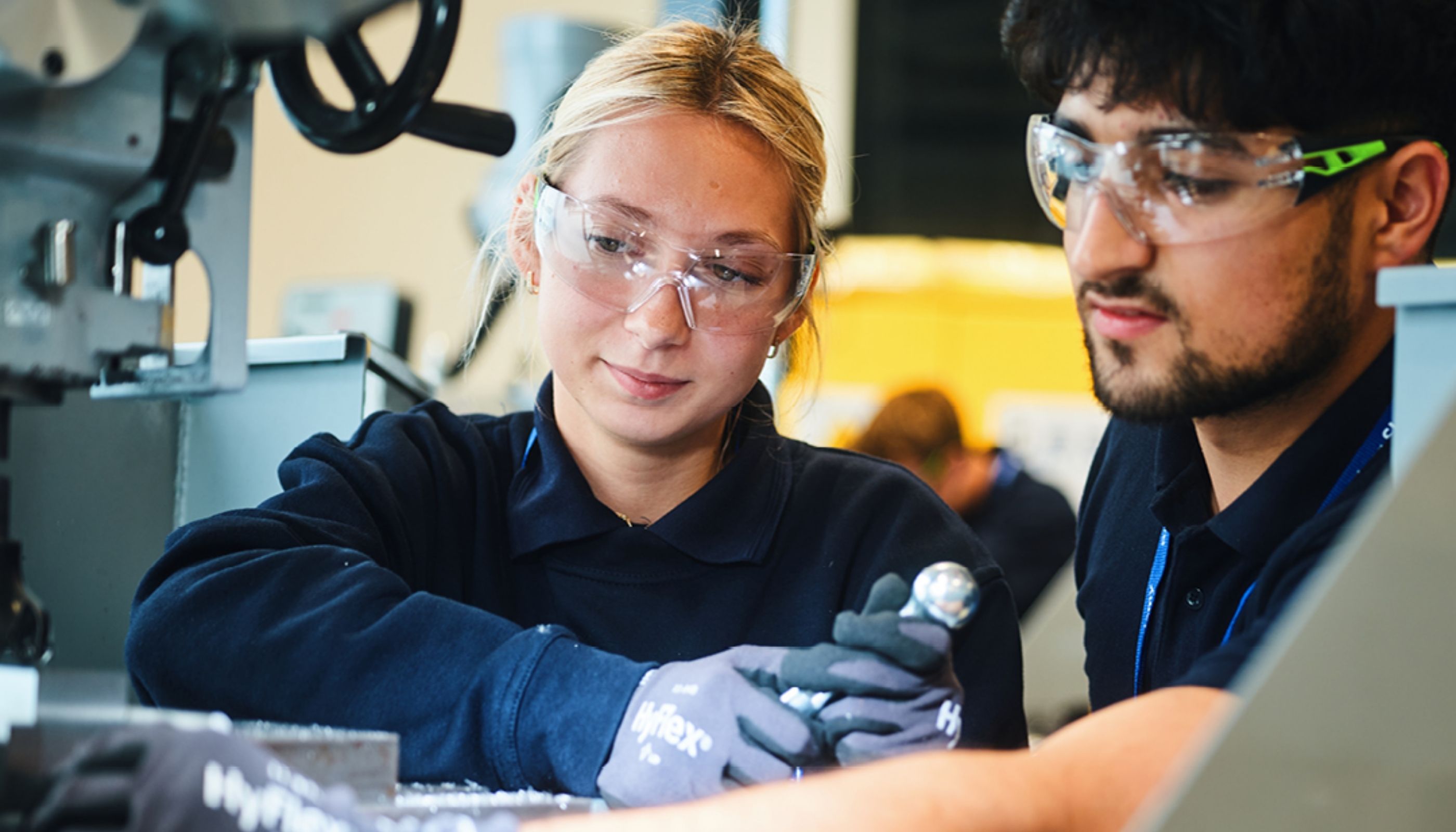
Rolls-Royce is pioneering a human centred, skills-first recruitment model
Photo credit: Rolls Royce
Long wants to shift the mindset from “Is this person right for the job?” to “How can we unlock their potential for this industry, and where might they thrive?” For Thompson, it all comes back to show and tell. “If I could redesign the recruitment process at Windracers, it would include lot of chairs placed a safe distance from the runway,” he laughs. “It’s not logical - it’s magical. Let people experience the ‘wow’.” An immersive experience of a different kind for sure.
It’s not logical - it’s magical. Let people experience the wow.
Simon Thompson
Windracers Group CEO

Paul Mahy-Rhodes, Educational Outreach Programme Manager, provides the NATS perspective.
Inspiring young people to see a future in aviation isn’t just a nice-to-have—it’s essential to the long-term health of our industry. Yet for many school-aged students, their understanding of aviation is limited to what they see at the airport: pilots, cabin crew, security, ground staff. That’s if they’ve even flown at all.
For too many, air travel feels distant—something for other people.
At NATS, we’ve spent the past 18 months developing an outreach programme led by our employees and shaped by data. We’re focusing our efforts where the need is greatest, using insights from the Social Mobility Commission to identify communities with the least access to opportunity.
Crucially, this work goes beyond simple presentations and work experience in only one type of role. It’s about long-term, meaningful impact. One school shared the story of a student at risk of homelessness who, after attending one of our Inspire events, reconnected with education and now says they want to be an engineer. The certificate they received was the thing they were most proud of that year. Will they join NATS one day? Maybe. But that’s not the point.
The point is that someone who had low self-esteem and confidence saw a place for themselves in the world again.
We know how powerful this work can be when it’s collective. As an industry, we have the talent, reach and influence to open more doors—to help young people across the UK imagine futures they hadn’t yet considered.
If more of us commit to consistent, purposeful outreach, we won’t just inspire careers—we’ll help shape a stronger, more inclusive aviation industry for everyone.

Choosing the right flight (career) path
What emerges from these conversations is a vision of aviation recruitment that’s purpose-driven, inclusive, immersive, and human. It challenges legacy assumptions and opens the door to a broader, more diverse pool of talent.
To unlock that future, the industry must:
- Highlight purpose and passion - connect careers to real-world impact, especially in sustainability and innovation.
- Showcase the full spectrum of roles - from AI and data analytics to logistics and air traffic control.
- Engage early and often - with experiences in schools, digital outreach, and family involvement through to micro-internships and virtual work experience.
- Rethink recruitment models - focusing on potential and human ‘soft’ skills, not just qualifications.
- Challenge misconceptions and celebrate diversity - in thought, background and ambition, to build a workforce fit for the future.
Aviation has always been a pioneering industry. With the right approach to talent, it can inspire the next generation to help shape its most exciting chapter yet.