Recruiting Tomorrow’s Controllers
Recruiting Tomorrow’s Controllers
Asking the ANSP experts

Continue reading...

As traffic volumes grow so does the need for the next generation of controllers
This feature draws on conversations with leaders from three major ANSPs; Jodie McMenamin, Director of Operations Training, and Helen Fuge, Head of Talent & HR Services at NATS; Roy van Doornum, Manager of Recruitment & Selection at LVNL in the Netherlands; and from NAV CANADA, Diana Kelly, Vice President and Chief Human Resources Officer, and Kevin Caron, Assistant Vice President, ATS Learning.
Each offers a distinct national perspective, but their insights reveal a strong alignment on the fundamentals: the role of the controller is changing, and meeting future demand requires thoughtful, sustained action.
Rethinking the Image of Air Traffic Control
Public perception still plays a significant role in shaping career interest. Ask someone what an air traffic controller does, and the word “stress” often surfaces quickly. It’s a perception, a myth if you like, that ANSPs are actively working to challenge.
“We see that the profession of air traffic controller is often associated with stress,” says Roy van Doornum of LVNL. “That perception can influence or have an impact on our recruitment process.”
LVNL’s communications now highlight the competencies and mindset needed for success in the role. Their messaging invites potential applicants to think differently about the job and about themselves. It is less “can you handle it?” and more “you might be better suited than you think.”
Our approach is less “can you handle it?” and more “you might be better suited than you think.”
Roy van Doornum, LVNL
At NATS, the approach is rooted in real voices and real stories. “We’ve targeted communications to debunk the myths using the voices of our people,” says Helen Fuge. “Through authentic content on social media and the NATS website, controllers are sharing what the role is truly like: complex and demanding, yes, but also structured, purposeful, and deeply rewarding.”
NAV CANADA, meanwhile, approached perception head-on with a campaign that blended humour and heart. Their “Goose Recruits” campaign, featuring two animated geese exploring air traffic careers, brought warmth and relatability to a highly technical profession.
“It was designed to inject energy into our employer brand and to show that we can have a bit of fun while still being serious about safety and service,” says Diana Kelly, Vice President and Chief Human Resources Officer. The result? More than 35,000 applications and a surge in brand engagement across digital platforms.
If perception is one barrier, access is another. And all three organisations are focusing on widening the door — not by lowering standards, but by removing unnecessary hurdles.
NATS has introduced a bursary scheme to help cover upfront costs like medicals and travel. Assessments are done online, and a more tailored onboarding process helps candidates get the personalised support they need. However Jodie McMenamin, Director of Operations Training, highlights the ongoing challenge: "We're trying to make the application process much more accessible, and that is generating more interest, but interest doesn’t always translate into applications, and applications don’t always translate into trainees. The follow-through is still a work in progress."
LVNL’s recent recruitment campaign, targeted at women and individuals from non-technical backgrounds, saw female applicant rates rise to 40 percent, nearly double the previous average. But as van Doornum explains, the work doesn’t stop at campaign success: “Despite progress, we continue to encounter stereotypes and perceptions of inaccessibility.”
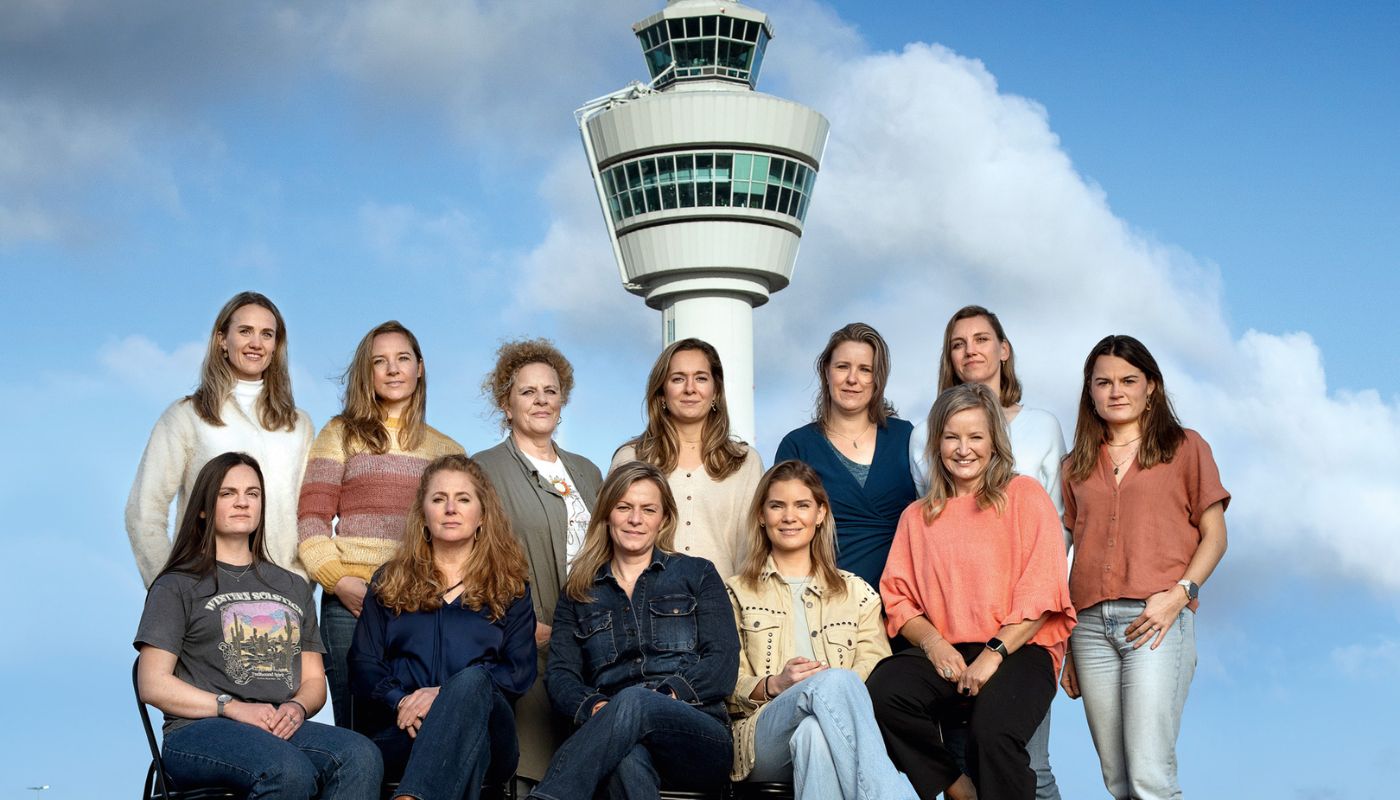
LVNL's recent campaign targeted at women saw female candidates rise by 40%
NAV CANADA has taken a systemic approach. “Attracting and supporting a diverse pool of candidates is one of our top priorities,” says Diana Kelly. Their outreach spans indigenous communities, equity-deserving job boards, and education networks. Internally, they’ve redesigned their assessment tools to focus on role-specific abilities, with fairness and accessibility built into the process. “We run simulations to test for adverse impact, and all staff involved in selection receive unconscious bias training,” she notes. Challenges such as unclear medical standards and geographical barriers still exist, but the commitment to equitable access remains strong.
We run simulations to test for adverse impact, and all staff involved in selection receive unconscious bias training.
Diana Kelly, NAV CANADA
Getting people through the door is just the beginning. Ensuring they thrive in training is essential to building a strong, confident workforce.
NATS has strengthened its support for trainees at every stage, starting with a dedicated recruitment team that guides candidates from initial application through onboarding, helping them navigate key requirements such as medical and security clearances. Once a trainee is accepted, responsibility transitions to a newly introduced scheme manager, who provides hands-on, practical support throughout the induction phase, where the trainees are then paired with a Training Welfare Manager who will support them throughout their college training.

At NATS trainees are paired with a Welfare Manager who supports them
The training programme itself has been enhanced to focus on both technical proficiency and non-technical skills such as communication, adaptability and decision-making which reflects the real-world demands of the role. Instructors are also being upskilled to identify early signs of struggle and intervene with tailored support.
LVNL has lowered educational requirements and invested in coaching. “We have invested in a non-technical skills (NTS) program and in improving the quality of coaching over the past few years,” says van Doornum. It’s a recognition that people arrive from different paths and need different things to succeed.

LVNL is investing in coaching and non-technical skills (NTS)
At NAV CANADA, training is framed as a high-performance journey. “Training to become an Air Traffic Services professional is one of the most demanding learning experiences in aviation,” says Kevin Caron, Assistant Vice President, ATS Learning. “Our focus is on giving every learner and instructor the support they need to succeed.”
Support includes more than content delivery. Over 1,500 hours of coaching, from specialists in sport psychology, wellness and leadership, have been delivered to students and instructors alike. “When we support both sides of the training relationship, we see better outcomes,” says Caron. That idea — of shared performance — sits at the heart of NAV CANADA’s learning model.
Our focus is on giving every learner and instructor the support they need to succeed.When we support both sides of the training relationship, we see better outcomes.
Kevin Caron, NAV CANADA
Relocation support, medical reimbursements and allowances for long-distance learners are part of the package too. The idea is simple: let learners focus on learning.
Retention Techniques
Keeping skilled controllers in the system requires more than good training, it requires an opportunity to do meaningful work, clear progression, and a sense of belonging.
At NATS, retention begins with broadening access. “We’re actively working to diversify our talent pool by removing barriers to entry and promoting inclusivity through targeted campaigns,” says Jodie McMenamin. This begins with widening the pathway into the profession itself with new initiatives like the Future Minds and Early Careers programmes targeting younger applicants and career-switchers. These recruitment campaigns focus on transferable skills like communication, decision-making and problem-solving rather than aviation experience alone.

The NATS Future Minds programme targets potential future applicants
Work-life balance is addressed early. Trainees receive a salary from day one, and NATS is transparent about shift patterns and expectations. Support for mental health and wellbeing is embedded throughout, alongside a clear emphasis on long-term benefits such as job stability and a structured career progression.
We’re actively working to diversify our talent pool by removing barriers to entry and promoting inclusivity through targeted campaigns.
Jodie McMenamin, NATS
LVNL offers a salary from the start of training, irregularity allowances, and the opportunity to take on varied responsibilities within the system. It’s a model that aligns well with the lifestyle and aspirations of younger professionals.

LVNL is aligning with the lifestyle and aspirations of younger professionals
NAV CANADA relies on strong internal culture. “Our most recent survey showed that 76 percent of operational staff intend to stay with the organisation for at least the next two years,” says Diana Kelly. That figure isn’t just about loyalty. It’s about alignment. People believing in the work, and in the place they do it.
Technology as Enabler
If there’s one constant in this story, it’s change. And technology is quietly reshaping how controllers are supported — not replaced. Innovation in ATM is advancing quickly, but technology is seen as a collaborator, not a competitor.

NAV CANADA is exploring human-machine collaboration to support controllers without replacing critical human oversight.
At NATS, technology is being actively explored to enhance the training journey and increase validation rates. Simulators are being used earlier in the training pipeline to develop core skills from the outset, helping trainees build confidence and competence before entering operational environments.
The integration of new tools and methods aims to improve both the pace and success rate of training, ensuring controllers are better prepared and supported as they progress. While the human element remains central, technology is playing an increasingly valuable role in improving outcomes and unlocking greater flexibility in how learning is delivered.

NATS is using technology to provide greater flexibility in how learning is delivered.
Looking Ahead
Planning for the future is no longer just a forecasting exercise, it’s a core part of how ANSPs operate. Each of the organisations interviewed is investing in smarter, more agile workforce planning to ensure the right people are in the right places at the right time.
LVNL is actively refining its recruitment strategy in response to labour market conditions. By monitoring shifts in applicant behaviour and adjusting its tone, messaging and channels accordingly, the organisation remains agile and responsive to the realities of talent acquisition.
At NATS, there is a strong collaboration between workforce planning and recruitment teams, ensuring that annual intake targets, approximately 130 trainees, are aligned with both operational demand and future retirements. The focus remains on building not only a strong pipeline but also a sustainable, resilient workforce.
NAV CANADA has seen a measurable rise in applicant numbers over the past 12 to 18 months, receiving between 3,000 and 5,000 applications each month. The success is the result of a deliberate and integrated approach. “The volume speaks to the strength of our integrated approach; targeted campaigns, in-person outreach, and meaningful partnerships,” says Diana Kelly, Vice President and Chief Human Resources Officer. More than 100 events were attended over the past year, including job fairs, open house events in remote areas, and school outreach initiatives. Their digital presence has been equally impactful: social media campaigns brought in over 22,000 applicants, while partnership programmes and advertising generated tens of thousands more.
The measurable rise in applicants speaks to the strength of our integrated approach; targeted campaigns, in-person outreach and meaningful partnerships.
Diana Kelly, NAV CANADA
To manage the scale, NAV CANADA has developed a structured, multi-channel processing strategy. Applicants are triaged through pre-screening and digital assessments that focus on role-specific cognitive and behavioural skills, replacing broader general intelligence testing. The system prioritises readiness and fit, allowing the recruitment team to narrow the funnel without compromising on potential.
Longer-term engagement starts early. Through a strategic partnership with ChatterHigh, NAV CANADA reached over 7,100 students in just four months - building early awareness among future job seekers. The organization’s recruitment strategy is dynamic and data-driven, supported by technologies such as the Optimal Staffing Analyser. Closely aligned with operational needs, this approach not only focuses on attracting top talent but also ensures preparedness and reach across every level of the talent pipeline.
Across all three organisations, the shift is clear: workforce planning is now proactive, data-driven and deeply integrated into strategic decision-making.