What does a job in aviation look like in 10-15 years?
Continue reading...
We sat down with two experts in the aviation industry: Cheryl Chen, an Air Traffic Controller for the Air Navigation and Weather Services (ANWS) in Taiwan, and the Executive Vice President (EVP) of the International Federation of Air Traffic Controllers’ Association (IFATCA) Asia Pacific; and Richard Cannon, Principal Researcher at NATS, working on Project Bluebird – one of the industry’s most exciting AI research projects.

Interview with an Expert: Cheryl Chen
Cheryl Chen is an Air Traffic Controller for the Air Navigation and Weather Services (ANWS) in Taiwan, and the Executive Vice President of the International Federation of Air Traffic Controllers’ Association (IFATCA) Asia Pacific.
Before joining the aviation industry in 2015, Cheryl received academic training (master’s degree and PhD candidate) in sociology from the University of Cambridge, UK. This background in sociology helps her to take a step back in her work as a controller and examine the bigger picture, analysing not just the issues happening within her sector, but within the whole airspace and how it is affected by regional and even global issues.
“Teamwork is a key element of solving problems as an air traffic controller, and we should take a similar collaborative approach to using technology and AI. I hope and expect to see a future where humans and AI can work as a team. As a controller myself, I have always been amazed by how teamwork can help solve big problems – and that should be how we work with new technologies and AI.
As a controller myself, I have always been amazed by how teamwork can help solve big problems – and that should be how we work with new technologies and AI.
“Human brains will never be as fast at calculations as a computer, but there are so many aspects of the role where the human has the advantage: observations, decision-making, understanding emotions and reading between the lines.
“It is all about building trust. It is harder for humans to build trust with automated systems, and we need to trust in the technology we interact with daily.”

Cheryl has worked as an air traffic controller at Taipei and SongShang airports
“Typically, academia is first to research and advance new technologies, followed by the companies and organisations providing the ATM technologies, and finally the Air Navigation Service Providers (ANSPs) themselves.
“This is partially because we, as controllers, are trained to ensure we maintain high quality and standards using safe, tested systems. I think there will be a shift in the mindset and skills needed to be a controller in terms of keeping up with the new ATM technologies out there, because these are the things that will keep you in aviation for the next 20, 30, 40+ years. The new generation of controllers must be able to learn and adapt to fast-changing technology.”
I think there will be a shift in the mindset and skills needed to be a controller in terms of keeping up with the new ATM technologies out there, because these are the things that will keep you in aviation for the next 20, 30, 40+ years.

We spoke to the co-chairs of the NATS Young Professionals Network (YPN), Meg Toward – Associate Project Manager and Sam Hamilton – Systems Engineer, to get their thoughts on the skills necessary for young professionals in aviation to start investing in now to prepare for the next 10-15 years in aviation.
“With the shift towards using more technology and AI in the growing aviation industry, cybersecurity skills are becoming even more vital,” says Meg.
Sam Hamilton adds, “There will always be a sustainability-induced push for, for example, cloud hosting as opposed to hosting data physically, but with increased utilisation of technology comes further cybersecurity implications.
"A delicate balance is needed between the increased technological demands of the industry and the ambitious net-zero and sustainability targets, to ensure aviation remains safe and secure while keeping up with the pace of change."
“I predict that many of the data processing aspects of being a controller will be passed over to technology. Voice communications could be taken over by messaging, leading to fewer errors.
“Controllers will be monitoring even more traffic in 2040 than today, with new and different airspace users – assisted by technology and AI tools. The human input in making those all-important traffic decisions will still be essential.”
The human input in making those all-important traffic decisions will still be essential.
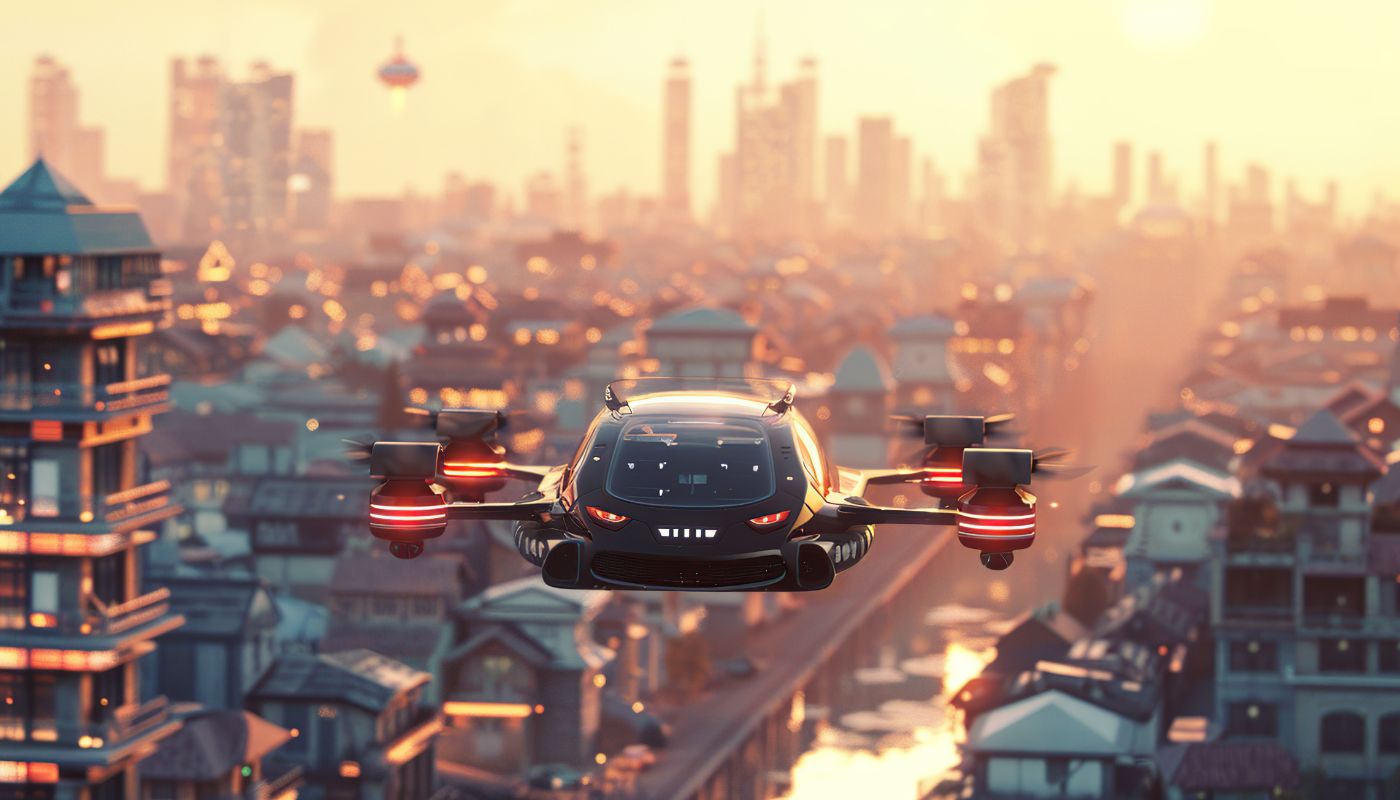
2040 will see a variety of new airspace users
“Every ANSP and state have different resources and challenges, but people are watching what is out there in the market and in some cases mirroring what is helping others. Information sharing is integral to solving issues and keeping progress in aviation consistent globally.
“In my experience after speaking with young people in Taiwan, the younger generations are not as interested in a career as a controller partially due to the long/odd working patterns. Even those who have been doing the job for many years may find these working patterns difficult. If technology and AI can help to relieve controllers of some of their workload and free up focus elsewhere, it will make the role more attractive and hopefully improve short staffing issues.”
If technology and AI can help to relieve controllers of some of their workload and free up focus elsewhere, it will make the role more attractive

Cheryl is looking forward to seeing how future technology can help controllers focus on the things that matter most.
“I hope that by utilising new technology and AI, we can continue to make the whole industry safer and more efficient. I am excited to see increased digital literacy across the industry and the utilisation of technology, helping controllers to focus on the things that matter most and reduce the pressure they face daily.”
I hope that by utilising new technology and AI, we can continue to make the whole industry safer and more efficient.

When asked to look forward to 2040, both Meg and Sam from the NATS YPN acknowledged how different the airspace will look – and the excitement that comes with that.
“It feels like the industry is about to accelerate and I’m excited to see how the skies will change, especially with developments in air mobility and urban traffic management,” says Sam.
Meg adds, “Looking to the future, I’m excited to see different types of traffic occupying the airspace, as well as the industry reaching sustainability milestones and targets.”
The Future of Technology and AI in Aviation
Helping to bring to life the dream of utilising technology and AI to improve safety and efficiency in the aviation industry is Project Bluebird. Project Bluebird is a five-year, £15 million collaboration between the Alan Turing Institute, NATS, and the University of Exeter.
NATS, in the commercial side of the partnership, brings industry awareness and technical expertise to the academic side of the partnership focussed on research and techniques.
- The project is predicated on three main research themes:
- Building a digital twin (a specialised and calibrated digital model) of UK airspace,
- Building AI agents, a computer program that emulates the behaviours of an air traffic controller, to operate and control aircraft within the digital twin,
- And the explainability and trustworthiness of the AI agents.
There is a clear role for AI to help improve the safety and efficiency of UK airspace and support human controllers with tools to assist them in decision making.

Interview with an Expert: Richard Cannon
“AI technology is developing at an incredibly fast pace, and we are striving to understand what that means for safety-critical air traffic control,” says Richard Cannon, Principal Researcher, NATS. “In the final year of Project Bluebird, we have developed a framework whereby we can test and authenticate the quality and safety of new technologies, AI and methodologies.”

Demonstrating Bluebird project AI at AI:UK
Richard explains that by testing emerging technologies in their early stages using the digital twin, it will lead to cheaper, easier, and safer integration with ATM systems later when the technology is ready to be used in a live, safety-critical environment.
“But without trust, these technologies will not go anywhere. We build trust in our AI agents through competency – putting them through the same tests a human controller would go through,” explains Richard. “While controllers typically face hundreds of hours of training before getting their licence, our agents need to be trained and tested with millions of real-world scenarios in order to gain even a basic level of competency. They are speaking the same language as the human controller, making it much easier for the controller to pinpoint the strengths and weaknesses of the agent and delegate tasks accordingly.”

AI taking control in the simulators
About the future of aviation, Richard comments, “What excites me is that we can make a real change, maximising the potential for us to run an efficient ATC operation. When new technology is available, and it is disruptive in a good way, how can we be ready and safely implement that? We are tackling the big challenges right at the start of the development pipeline, ensuring that we are ready to implement innovative technologies and methods as soon as they are tested and safe.”
When new technology is available, and it is disruptive in a good way, how can we be ready and safely implement that? We are tackling the big challenges right at the start of the development pipeline, ensuring that we are ready to implement innovative technologies and methods as soon as they are tested and safe.