In the air

Helping aircraft to fly smarter routes that use less fuel, produce fewer emissions and minimise delays

Introduction

As the UK's air traffic management provider, we play an important role in helping aviation reduce its environmental impact. By managing airspace safely and efficiently, investing in new technology and modernising the UK's airspace network, we're helping aircraft fly smarter routes that use less fuel, produce fewer emissions and minimise delays.

Our work supports the UK Government's Jet Zero strategy to achieve net zero aviation emissions by 2050, while ensuring the UK's airspace continues to support a growing aviation sector safely and efficiently.

Every mile matters

The most sustainable flight is one that spends less time in the air. Small improvements made across millions of flights can have a significant impact.

Since 2007, 1.8 million tonnes of CO₂e savings per annum have been enabled within UK airspace. Together the impact of these changes, based on 2019 traffic levels, equates to a 7% improvement in UK airspace emissions. NATS is committed to reducing a further 1 million tonnes of CO₂e per year by 2050.

We're continually improving how aircraft move through UK airspace, helping airlines reduce fuel burn while maintaining the highest standards of safety.

Modernising UK airspace

The UK's airspace is one of the busiest and most complex in the world, handling around a quarter of Europe's traffic despite representing only 11% of its airspace.  With flights expected to exceed 3 million each year by 2030, we're redesigning airspace to make it fit for the future.

Airspace modernisation will enable aircraft to fly more efficient routes, reducing fuel use, carbon emissions and, where possible, noise for communities beneath flight paths. It's expected to mitigate up to 4% of aviation emissions within UK airspace.

Airspace Modernisation

Smarter routes. Lower emissions.

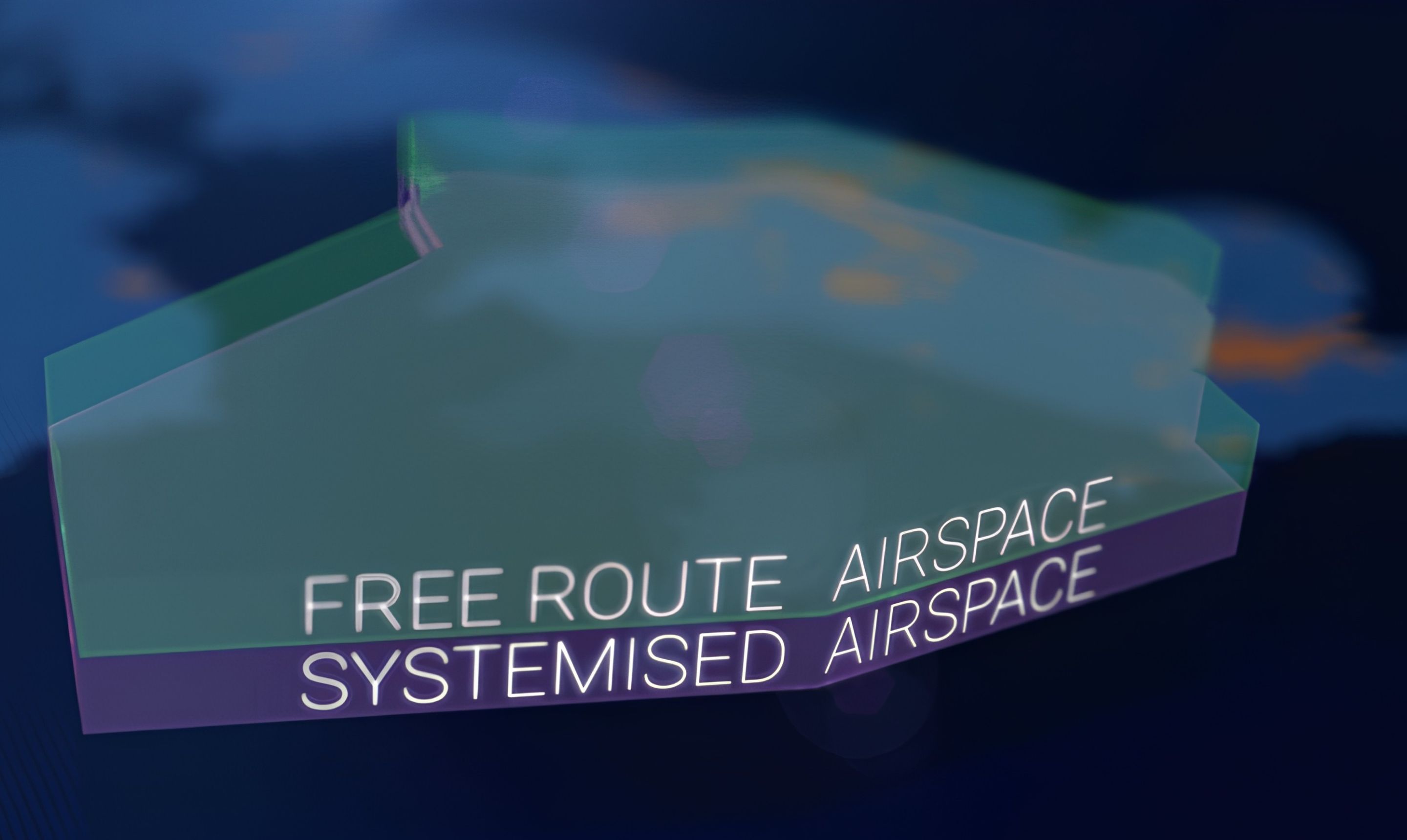
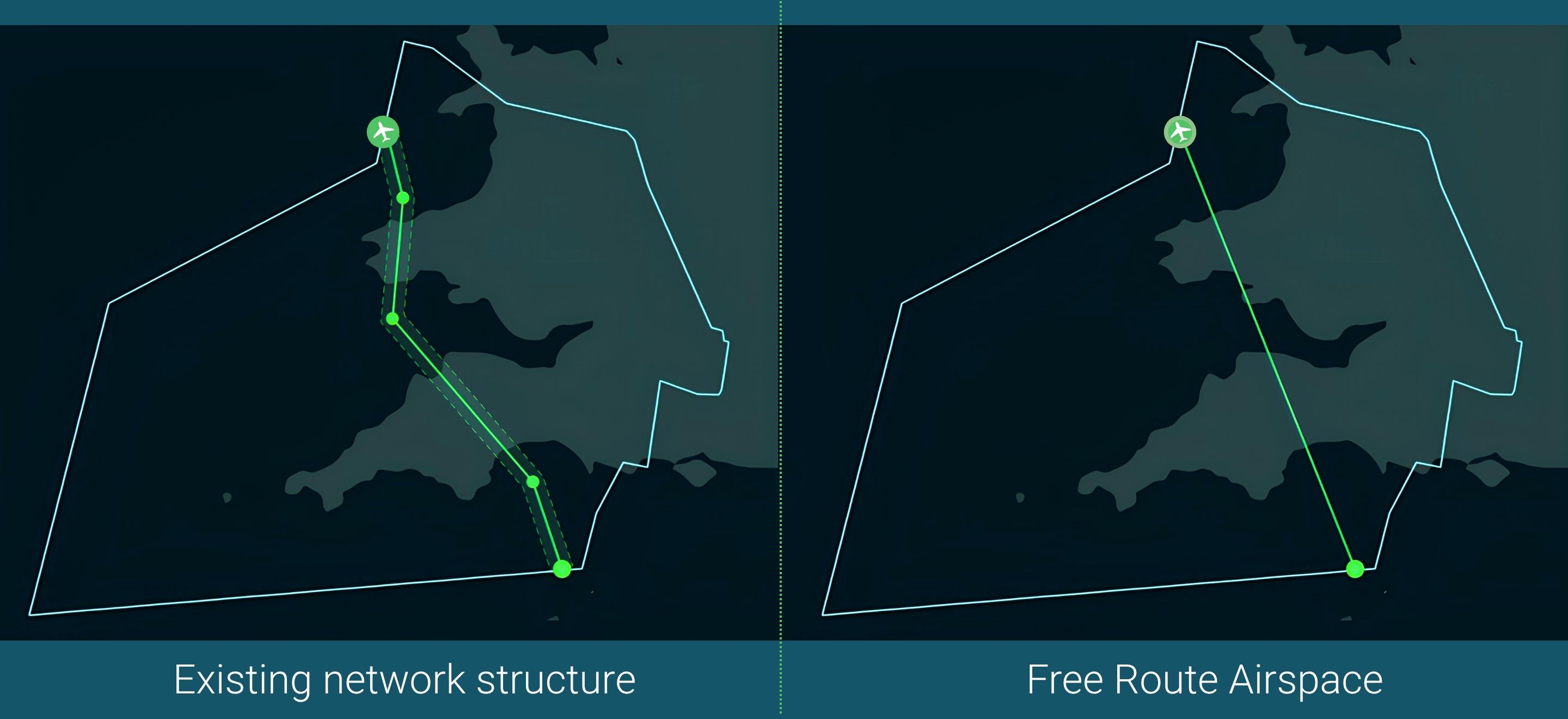
Technology helps aircraft fly closer to their ideal route.  In 2025 we introduced Free Route Airspace across all Scottish airspace, allowing aircraft to plan the most efficient route between entry and exit points rather than following fixed airways.

The result is shorter journeys, lower fuel burn and an estimated 18,000 tonnes of CO₂e savings every year. 

We've also rolled out the Air Traffic Management Portal (ATM-P), which recommends more efficient flight plans in real time based on demand and available airspace.

Improving efficiency from runway to ocean

Reducing aviation's environmental impact is a shared challenge. It doesn't happen in one place — it happens across the entire journey. We work closely with airlines, airports, manufacturers, regulators and international partners to develop new ways of reducing emissions while maintaining safe, resilient operations.

Our teams contribute to international programmes and research that are helping shape the future of sustainable aviation, while continuing to improve the way UK airspace is managed every day.

We're developing tools that help our customers reduce emissions, including:

  • Intelligent Approach, helping reduce emissions during final approach while supporting airport capacity.
  • Demand Capacity Balancer, which now includes environmental modelling alongside operational performance.

Together, initiatives such as Pairwise and Time Based Separation are expected to deliver up to 70,000 tonnes of CO₂e savings each year once fully embedded.

Looking beyond today

Our responsibility doesn't stop with operational improvements. Alongside reducing emissions through more efficient airspace management, we've begun investing in high-integrity, durable carbon removal credits as part of our wider sustainability approach.

We're also continuing to develop new technologies, support industry research and work with partners across the UK and internationally to help aviation reach net zero. Because creating a more sustainable future for aviation will take collaboration, innovation and continuous improvement.

On the ground

UK flights

-
Departed today
-
Landed today
-
Currently airborne
-
Handled yesterday
Menu

Please start typing and we will search our website for you.

Search Results